In modern inventory management, choosing the right management method is crucial for maintaining inventory flow and reducing costs. Among the various methods, the First In, First Out (FIFO) method is one of the most commonly used and effective approaches. In this instructional article, we will explore what the FIFO method is, its advantages and applications, and why this method can help businesses improve operational efficiency. This article is also designed with SEO optimization in mind, ensuring that readers can easily find related content on search engines.
What is the First In, First Out Method (FIFO)?
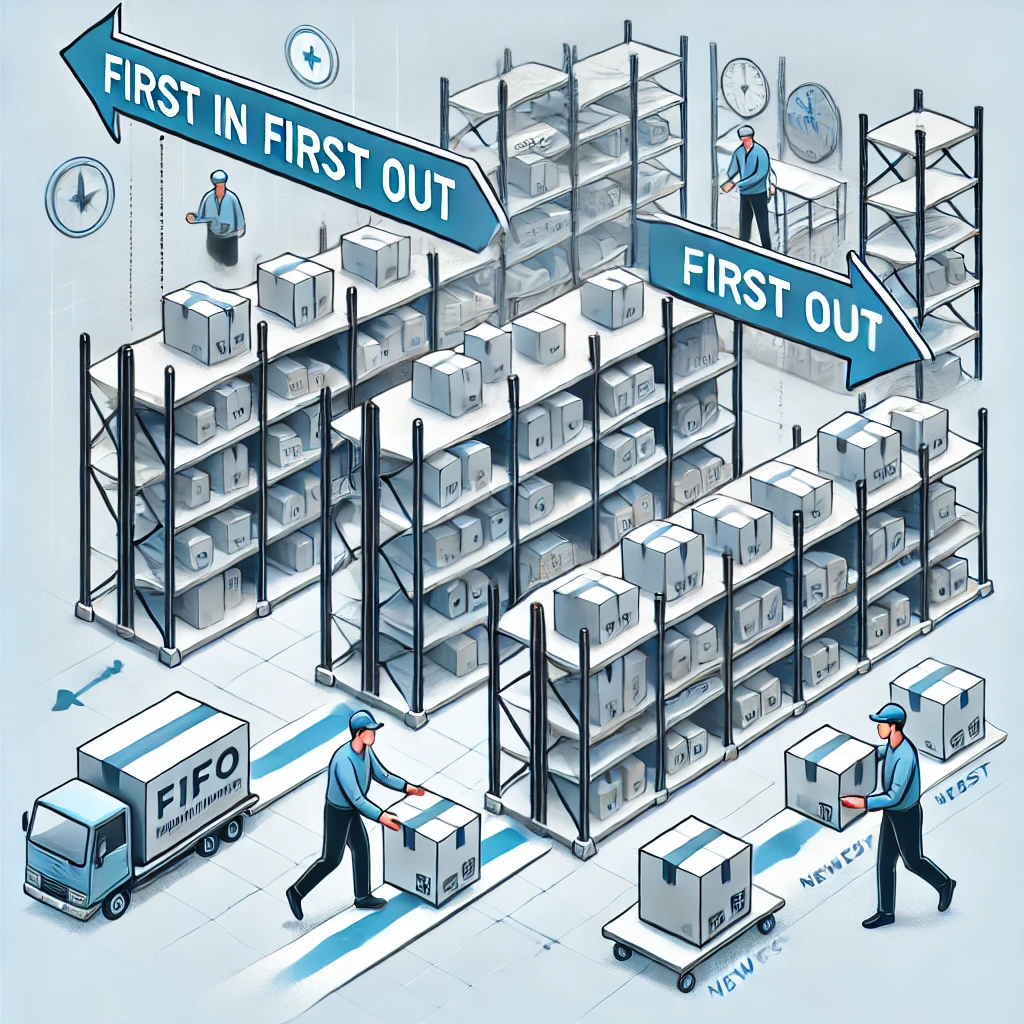
**First In, First Out (FIFO)** is an inventory management and cost calculation method based on the principle that “the first goods to enter the warehouse should be the first to leave.” In other words, when a business sells or uses inventory, the products that were entered first should be processed first, while newer items stay in the warehouse waiting to be processed.
This method is especially common in industries like food, pharmaceuticals, and cosmetics, where products have clear expiration dates or shelf lives. Ensuring that older products are sold first helps prevent waste or losses due to expired inventory.
FIFO Operation Principle
In a FIFO system, when a business receives new products, they are added to the back of the inventory, while the products received earlier are placed at the front. When an order arrives or inventory needs to be picked, the products that entered the inventory first will be prioritized for shipping or usage.
The specific process is as follows:
- Inventory Sorting: Products that were purchased earlier are given priority and placed at the front of the warehouse, with new stock gradually placed behind them.
- Outbound Order Sequence: When products need to be shipped, the items that entered the inventory first are the ones selected to be shipped or used first.
- Inventory Update: As products are removed from inventory, the inventory records are automatically updated, and the products entering the warehouse later are processed in chronological order.
- 4o mini
FIFO Advantages
Adopting the FIFO method for inventory management offers several benefits for businesses. Here are the main advantages of FIFO:
1. Reduces the Risk of Inventory Expiration
FIFO helps businesses minimize the risk of products expiring in inventory. This is particularly important for products with expiration dates or freshness requirements (e.g., food, pharmaceuticals). FIFO ensures that older products are sold or used first, preventing waste due to expired goods.
2. Improves Cash Flow Turn Over
By selling older inventory first, businesses can recover funds more quickly, thereby accelerating cash flow. This is particularly important for industries that need to maintain high inventory liquidity, such as retail or e-commerce.
3. Better Reflects Actual Costs
The FIFO method better reflects the true cost of products, especially when there are significant price fluctuations. For example, as the purchase price of goods changes, the FIFO system ensures that products are sold based on their actual purchase cost, allowing financial reports to more accurately reflect the business’s financial condition.
4. Simplifies Inventory Management
Compared to other inventory management methods (like LIFO), FIFO is more intuitive and easier to understand. The process is simple, making it especially suitable for small and medium-sized enterprises (SMEs). It’s also easy to implement and track.
Industries and Scenarios Where the FIFO Method is Applicable
The FIFO method is applicable in many different industries and product types, especially in the following scenarios where it can maximize its effectiveness:
1. Food and Beverage Industry
n these industries, the product shelf life is crucial. The FIFO method helps businesses ensure that the earliest received food and beverage items are sold first, reducing the risk of expiration and avoiding waste or losses.
2. Pharmaceutical and Cosmetics Industry
Similar to the food industry, pharmaceuticals and cosmetics have specific expiration dates. By using the FIFO system, businesses can ensure that all stock is used or sold within its valid period, minimizing the risk of expired products.
3. Retail and E-commerce Industry
For fast-moving consumer goods, the FIFO method helps businesses maintain the freshness of their inventory, optimize inventory turnover, and improve overall operational efficiency.
4. Manufacturing Industry
Manufacturing companies often need to manage raw material inventories, especially in situations where raw material prices fluctuate. FIFO helps businesses more accurately calculate costs and ensures smooth production processes.
Comparison of FIFO with Other Inventory Management Methods
In inventory management, apart from the First-In-First-Out (FIFO) method, there are several other commonly used methods, including Last-In-First-Out (LIFO) and Weighted Average Cost. Here is a comparison between FIFO and other methods:
1. FIFO vs LIFO
LIFO (Last-In-First-Out) is the opposite of FIFO, as it prioritizes the most recently stocked products. LIFO is more commonly used in industries with price volatility, as it allows businesses to sell high-cost items first, reducing their tax burden. However, LIFO is not suitable for products with an expiration date, as it may result in older stock remaining in the warehouse and potentially expiring.
2. FIFO vs Weighted Average Cost
The Weighted Average Cost method is an inventory valuation method that calculates the cost of goods sold based on the average cost of inventory. While the weighted average method provides stable cost calculations when price fluctuations are minimal, it lacks the precision of FIFO, especially in industries with products that have a limited shelf life.
Challenges of Implementing FIFO
While FIFO is an efficient inventory management method, it can present some challenges in practical implementation. For example:
- Warehouse Layout: To implement FIFO, businesses need to design a suitable warehouse layout to ensure that older products are easily accessible. This requires investment in space and facilities.
- Technical Support: Modern businesses often rely on inventory management systems to implement FIFO, which requires the necessary technical equipment and support.
Conclusion
**First-In-First-Out (FIFO)** is an effective inventory management method, particularly suitable for industries that need to maintain inventory liquidity and prevent product expiration. It not only helps businesses reduce the risk of inventory expiration but also improves cash flow turnover, reflects actual costs, and simplifies inventory management processes. For industries such as food, pharmaceuticals, retail, and manufacturing, FIFO is an indispensable inventory management tool.
Regardless of your business size, implementing FIFO can bring significant inventory management advantages. With an optimized warehouse layout and technical support, FIFO can greatly enhance your operational efficiency and improve overall performance.